

Define it once. Reuse it across your work.
Turn calculations and reports into reusable data artifacts, managed together in Settra. Create and run them in ChatGPT or Claude today using your Google Sheets and spreadsheet files.
One source of truth for your calculations.
Each artifact keeps the sources, calculations, rules, and inputs behind a result in one maintained definition. Review and refine that definition in Settra, then reuse it with fresh data or different inputs. Your collection grows with the metrics and reports you need.

- Connect your data
Select the spreadsheet files in Google Drive you want Settra to use.
- Define an artifact
Work with ChatGPT or Claude to set its sources, calculations, and inputs, then check the result.
- Build your collection
Save artifacts for the metrics and reports you need. Find and rerun them as your data or inputs change.
One artifact. More ways to use it.
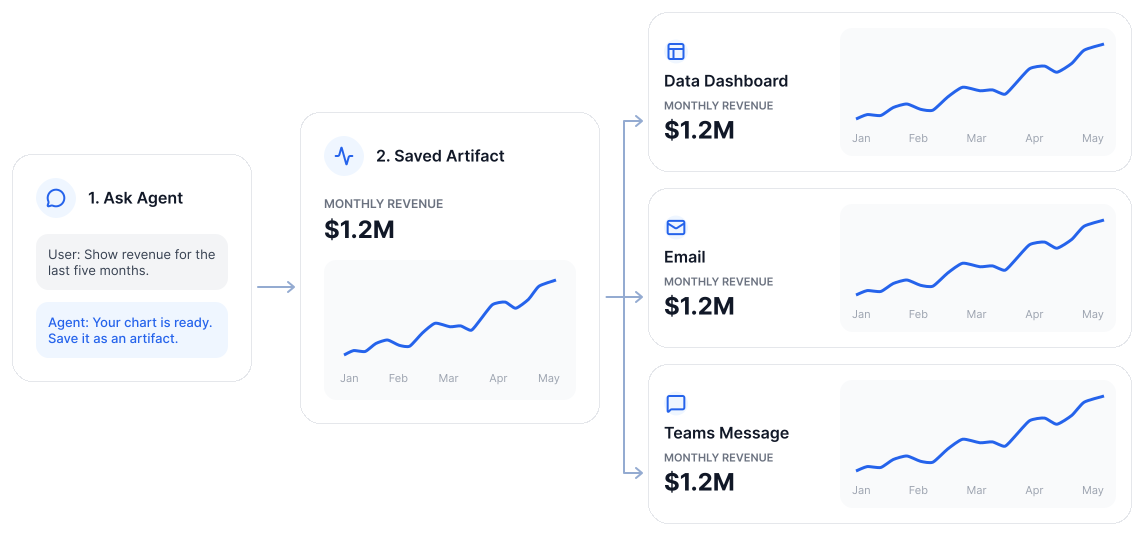
The goal is to reuse the same artifacts wherever results are needed, with no separate calculation logic to maintain for each destination.
Use them in ChatGPT or Claude today. We’re building toward composing web dashboards from multiple artifacts and delivering selected results through Slack, Microsoft Teams, and email.
Help shape Settra around a real report.
Do the same calculations end up in several reports or updates? I’m looking for people working from spreadsheets to help shape Settra around that work. We’ll start with a conversation about your process, then try one reusable artifact together if there’s a fit.
Frequently asked questions
Where do I use Settra?
In ChatGPT or Claude, connected to Settra through MCP. There’s no built-in chat interface yet. The connection guide explains the setup and account requirements.
What does an artifact save?
A definition of how to produce a result from your data. Artifacts are stored as YAML, with the sources, calculation rules, and inputs needed to run them again. Each run produces a new result.
What does “one source of truth” mean?
One maintained definition for each calculation or report. The goal is for every use of an artifact to rely on that definition, so you don’t have to recreate its logic for each destination. Different data, filters, or reporting periods can produce different results while using the same definition.